Friday, 14 May 2010

Gregory Crewdson

Is one of my favorite photographers the way he planned his scene and how he choose the perfect time to creat the magical moment in the image. Every detail of these images is meticulously planned and staged, in particular the lighting. In some instances, extra lighting and special effects such as artificial rain or dry ice are used to enhance a natural moment of twilight. In others, the effect of twilight is entirely artificially created.

All the images propose twilight as a poetic condition. It is a metaphor for, and backdrop to, uncanny events that momentarily transport actors from the homeliness and security of their suburban context. Crewdson has drawn inspiration from the town of Lee, Massachusetts, where his family has a cabin: it was the setting for his Natural Wonder series (1992-97), which fused the natural and domestic worlds in surreal, vividly colorful images.

In some of my I images I have taken in the twilight I achieved in some of my images without a crew it’s by me and my camera, its not easy to capture what I really want to be in my frame because its not been planned like Gregory Crewdson but I’m trying to capture the best twilight moment that I’m looking for to be in my frame.

I think I always have been drawn to photography because I want to construct a perfect world. I want to try to create this moment that is separate from the chaos of my life, and to do that I think I create enormous disorder. And I like that craziness because I think that it creates almost a sort of neurotic energy on the set, and through that there is a moment of transportation. And in all my pictures what I am ultimately interested in is that moment of transcendence or transportation, where one is transported into another place, into a perfect, still world. Despite my compulsion to create this still world, it always meets up against the impossibility of doing so. So, I like the collision between this need for order and perfection and how it collides with a sense of the impossible. I like where possibility and impossibly meet.”
Gregory Crewdson, from an interview on Egg (pbs.org)

Gregory Crewdson
Untitled from the series 'Beneath the Roses'
2004

References


Thursday, 13 May 2010

Stephen Shore


Stephen Shore (born 1947 in New York City) is an American photographer known for his deadpan images of banal scenes and objects in the United States, and for his pioneering use of color in art photography. Stephen Shore was interested in photography from an early age. Self-taught, he received a photographic darkroom kit at age six. He began to use a 35mm camera three years later and made his first color photographs. At ten he received a copy of Walker Evans's book, American Photographs, which influenced him greatly. His career began at the early age of fourteen, In 1972, for instance, the New York native embarked on a road trip that was to offer what he refers to as his “first view of America.” A decade’s worth of summer road trips followed, including the one that took Shore to Coronado Street. In 1974, Shore began photographing with an 8×10 view camera. He thinks in his photography how is the elements related to each other and the balance to his point that seems central to the picture .


Stephen Shore, U.S. 97, South of Klamath Falls, Oregon, July 21, 1973


Stephen Shore is one other photography’s seminal figures. A pioneer in the art of color photography, his large format photos articulated new directions in the 1970s. the point that is central to the picture and using it to determine where to point his camera to be very interesting and informative. I felt that it helped me to improve my view of thinking be for taking my image.


Reference"

William Eggleston

William Eggleston was born in Memphis, Tennessee and raised in Sumner, Mississippi.
Eggleston's early photographic efforts were inspired by the work of Swiss-born photographer Robert Frank, and by French photographer Henri Cartier-Bresson's, First photographing in black-and-white, Eggleston began experimenting with color in 1965 and 1966. color transparency film became his dominant medium in the later sixties. “The dye-transfer process resulted in some of Eggleston's most striking and famous work, such as his 1973 photograph entitled The Red Ceiling, of which Eggleston said, "The Red Ceiling is so powerful, that in fact I've never seen it reproduced on the page to my satisfaction. When you look at the dye it is like red blood that's wet on the wall.... A little red is usually enough, but to work with an entire red surface was a challenge."


In this the red ceiling I love the way the image is been taken and how the red color makes it powerful as Eggleston says to work with entire red surface was a challenge .Eggleston photography in this image is one of contemporary art photography its strong and powerful as the way he thought to take the ceiling on that time .


Reference


Wednesday, 28 April 2010

Feminism


Saudi feminism, a hotel for women only

The Luthan hotel in the north of Riyadh will try to put an end to the problems of Saudi women who travel and work in the country, and who always need special authorization to reserve a room in 'mixed' hotels. The rhythm of a woman's life in Saudi Arabia is marked by the permits that male figures of reference must approve before she can do anything, from driving a car to reserving a hotel room to working. The Luthan spa is a hotel for women only, the first of its kind in the Gulf and the only one where no special permissions will be necessary. The hotel emerged from the idea of a group of businesswomen who wanted to resolve some of the difficulties that Saudi women face. The chairperson of the board of partners is Princess Madawi Bint Mohammad Bin Abdullah, who says they have obtained approval from Sultan Bin Salman, secretary general of the Saudi tourism commission.

The current laws in Saudi Arabia do not allow 'mixing' among the sexes, and businesswomen who travel for their work often find themselves in unpleasant situations when the moment arrives to check in to a hotel. The hotels of the kingdom will accommodate only women who are accompanied by a male family member, or in possession of a written permit granted by a manager at their workplace, or by the police.

I really like the idea and it’s just a start of women’s problems issues with the special authorization like traveling as a women alone its must have an authorization from a father or brother, life women in Saudi Arabia is changing to the Good with King Abulla applauded a statement that women they will drive cars someday. Women then called for a dialogue to convince opponents of female driving to change their mis-conceptions. that the issue required patience, and he would not impose it against the will of the people. He noted that women drive on the kingdom's deserts and in rural areas. "I believe strongly in the rights of women", he said during his first TV interview adding: "I believe the day will come when women drive. In time, I believe it will be possible. And I believe patience is a virtue.

Women life in Saudi Arabia lives changing for the better in Saudi Arabia but slowly. The Ladies Kingdom has given several women the chance to start their own businesses, including an artist who has a small gallery. Women entrepreneurs will be able to rent office space in a soon toopen business center.


Reference

Modernism/post modernism


Modernism in Saudi Arabia :

The geographical region of the Arab land has frame the cultural background of the country relates to modernism of Arab world. The Arab world includes Algeria, Bahrain, Egypt, Iraq, Jordan, Kuwait, Lebanon, Libya, Morocco, Oman, Palestine, Qatar, Saudi Arabia, Sudan, Syria, Tunisia, United Arab Emirates and Yemen, and spreads over the Middle East (or the Eastern Mediterranean. Most Arab countries gained their independence from British and French colonial rule between the end of World War II and the mid 1950s.

Modernists focused on innovative forms of expression and rejected realism and creating and shaping the world and Arab world (specifically art/architecture/things that make up culture). Modernism can be a way of thinking that supports the ability of humans to be able to change their environment in ways that make it more practical for their use. Although the political, economic and social environments since the 19th century have caused the decline of traditional arts in the Arab world It also rejects boundaries between high and "low" forms of art. By the middle of the 20th century, modern Arab had developed, based on Western aesthetics and norms; and by the end of the 20th century all Arab countries had extended modern art movements that reflected their cultural and artistic growth.


The Bicycle is a larger-than-life sculpture of a bicycle and is the most famous landmark in Jeddah


Example is The King Fahd Causeway is multiple dikes - bridge combination connecting Khobar, Saudi Arabia, and the island of Kingdom of Bahrain.1982


Example of a modernist building in Saudi Arabia is the Department of defence


Postmodernism: The modern is always historically at war with what comes immediately before it in this same sense, modern is always post-something. Postmodernism deals with the idea that if something is meaningless that it is not important to focus on finding meaning like how some gallerys end up in burnes empty rooms, it’s about having fun with creating it . Edge of Arabia, which opened on October 16th at the Brunei Gallery, school of Oriental and Africa Studies (SOAS) of the University of London, offers a unique opportunity to see the work of 17 contemporary artists from Saudi Arabia.

Installation art is an good example of post modern art.Ayman Yossri Daydban


The Choice photograph by Manal Al Dowayan


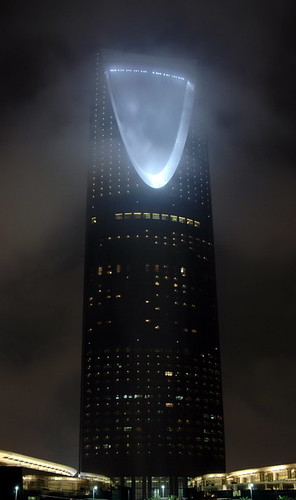
The Kingdom Tower in Riyadh is the tallest skyscraper in Saudi Arabia

Lionel Mill's film has unique access to Prince Saud bin Abdul Mohsen, one of the rulers of the rich, powerful and secretive Saudi royal family. This is a fascinating insight into the conflicts between tradition and modernity in one of the world's most conservative and autocratic countries.


References

http://www.bbc.co.uk/programmes/b00fh52m

http://www.youtube.com/watch?v=wk_mvSp1xmA

http://worldslongestbridges.blogspot.com/2009/12/worlds-longest-bridges.html

http://susieofarabia.wordpress.com/2008/05/11/larger-than-life-bicycle-sculpture/

http://susieofarabia.wordpress.com/2008/11/14/skywatch-jeddah-sculpture/

http://www.saudiarabian.tv/?p=1140

http://www.menassat.com/?q=en/news-articles/5101-expressionism-saudi-fine-arts-its-time-document

http://www.thegarretboys.com/news/saudinews.htm

http://universes-in-universe.org/eng/nafas/articles/2003/modern_art_from_the_arab_world

http://www.galenfrysinger.com/saudi_arabia_modern_architecture.htm

http://universes-in-universe.org/eng/nafas/articles/2008/edge_of_arabia

http://universes-in-universe.org/eng/nafas/articles/2008/edge_of_arabia/photos/11_ayman_yossri_daydban

http://universes-in-universe.org/eng/nafas/articles/2008/edge_of_arabia/photos/08_manal_al_dowayan

http://www.djibnet.com/photo/saudi+arabia/kingdom-tower-1145676387.html

Introducing Postmodernism", by Richard Appignanesi (Author), Chris Garratt

Saturday, 17 April 2010

Cinema project

This project is inspired by the intimate relation between photography and cinema ,from lightning,set design to a narrative, port rating characters and locations through film stills.
I was inspired in this project by the film "The Indian in The Cupboard" by Banks,Lynne Ride and Brok Cole. Garden City, N.Y.:Doubleday,1980.

My images is been inspired by the Italian photographer Olivo Barbieri an urban environments photographer . He is recognized for his actual landscapes by simulating shallow depth of filed via the use of tilt-shift lens photography.And Slinkachu photography Slinkachu has attracted a cult audience for his photographs of tiny, hand-painted figures in unlikely urban settings.
And the lighting is been inspired by David Levinthal an American photographer,Levinthal uses a small toys and props with dramatic lighting to construct mini environments of subject matters.

a series images is been taken for my first year photography Cinema project,and my plot story is "A girl is suffering from asthma, smoking heavily every day cant realize how smoking is effecting her health. Its been told from the doctors that she have to quit smoking.
A little toys " Miniature" plastic toy figures in her living room they come bake to life when she go's to sleep. The miniatures steeling her cigarettes from her cigarettes from her packet and throw them from the balcony so when she wake up she founds nothing in the destroyed packet.
They are trying to help here without she knows" .


Thursday, 8 April 2010

Nan Goldin


Biography

Nan Goldin (born September 12, 1953) is an American fine-art and documentary photographer. She has been represented in America exclusively by Matthew Marks Gallery since 1992 and Yvon Lambert Gallery in Paris.

Goldin was born in Washington, D.C., and grew up in an upper-middle-class Jewish family in the Boston, Massachusetts suburb of Lexington. After attending the nearby Lexington High School, she enrolled at the Satya Community School in Lincoln, where a teacher introduced her to the camera in 1968; Goldin was then fifteen years old. Her first solo show, held in Boston in 1973, was based on her photographic journeys among the city's gay and transsexual communities, to which she had been introduced by her friend David Armstrong. Goldin graduated from the School of the Museum of Fine Arts, Boston/Tufts University in 1977/1978, where she had worked mostly with Cibachrome prints.
Following graduation, Goldin moved to New York City. She began documenting the post-punk new-wave music scene, along with the city's vibrant, post-Stonewall gay subculture of the late 1970s and early 1980s. She was drawn especially to the Bowery's hard-drug subculture; these photographs, taken between 1979 and 1986, form her famous work The Ballad of Sexual Dependency — a title taken from a song in Bertolt Brecht's Threepenny Opera. These snapshot aesthetic images depict drug use, violent, aggressive couples and autobiographical moments. Most of her Ballad subjects were dead by the 1990s, lost either to drug overdose or AIDS; this tally included close friends and often-photographed subjects Greer Lankton and Cookie Mueller. In 2003, The New York Times nodded to the work's impact, explaining Goldin had "forged a genre, with photography as influential as any in the last twenty years." In addition to Ballad, she combined her Bowery pictures in two other series: "I'll Be Your Mirror" (from a song on The Velvet Underground's The Velvet Underground & Nico album) and "All By Myself."
Goldin's work is most often presented in the form of a slideshow, and has been shown at film festivals; her most famous being a 45 minute show in which 800 pictures are displayed. The main themes of her early pictures are love, gender, domesticity, and sexuality; these frames are usually shot with available light. She has affectionately documented women looking in mirrors, girls in bathrooms and barrooms, drag queens, sexual acts, and the culture of obsession and dependency. The images are viewed like a private journal made public. .

Goldin's work since 1995 has included a wide array of subject matter: collaborative book projects with famed Japanese photographer Nobuyoshi Araki; New York City skylines; uncanny landscapes (notably of people in water); her lover, Siobhan; and babies, parenthood and family life.


I have chosen this image for Nan Goldin because I want to see her different in her others most known pictures ,

Goldin lives in New York and Paris—one reason the French Pompidou Centre mounted a major retrospective of her work in 2002. Her hand was injured in a fall in 2002, and she currently retains less ability to turn it than in the past .
In 2006, her exhibition, Chasing a Ghost, opened in New York. It was the first installation by her to include moving pictures, a fully narrative score, and voiceover, and included the disturbing three-screen slide and video presentation Sisters, Saints, & Sybils. The work involved her sister Barbara's suicide and how she coped through a numerous amount of images and narratives. Her works are developing more and more into cinemaesque features, exemplifying her graviation towards working with films.
She was presented the 2007 Hasselblad Award on 10 November, 2007.

Criticism
Some critics have accused her of making heroin-use appear glamorous, and of pioneering a grunge style that later became popularized by youth fashion magazines such as The Face and I-D. However, in a 2002 interview with The Observer, Goldin herself called the use of "heroin chic" to sell clothes and perfumes "reprehensible and evil."
Portrayal in film
The photographs by the character Lucy Berliner, played by actress Ally Sheedy in the 1998 film High Art, were based on those by Goldin.

Links to her gallery:
http://www.matthewmarks.com/artists/nan-goldin/
http://www.artnet.com/artist/7135/nan-goldin.html
http://www.artnet.com/Magazine/features/fineman/fineman12-12-96.asp
http://www.lightstalkers.org/images/show/826903
http://www.marissaneave.com/2008/05/oh-nan-goldins-heartbeat/


Nan Goldin Interview:
http://www.youtube.com/watch?v=0Z3sihEuiEk
http://www.youtube.com/watch?v=YgL37xpBntw